
Urogenital Cancer Treatment
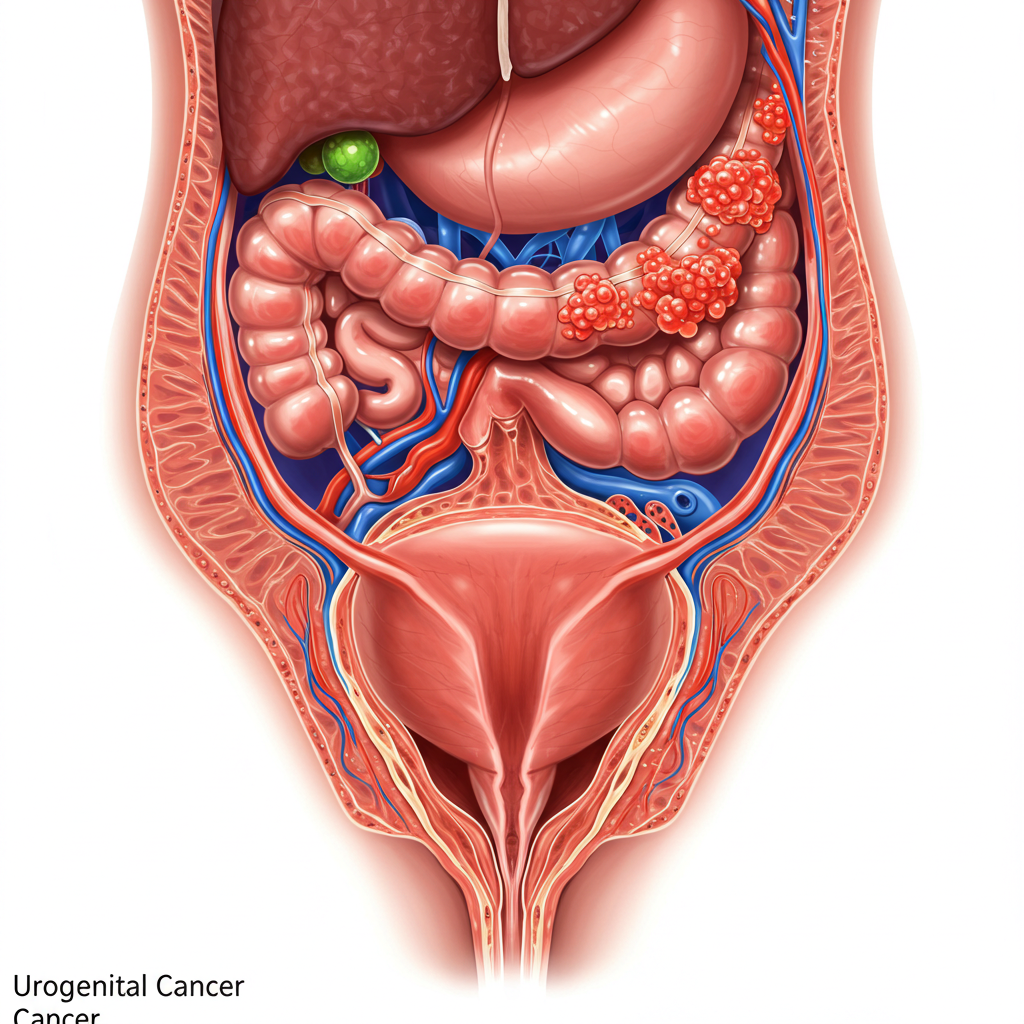
Urogenital Cancer
Urogenital cancers are those that affect the organs of the urinary and male reproductive systems. These include the kidneys, bladder, prostate gland, testes, and penis. Each of these cancers has unique characteristics, risk factors, and treatment approaches.
Types of Urogenital Cancers
Some of the main types of urogenital cancers include:
- Kidney Cancer: Cancer that originates in the kidneys. The most common type is renal cell carcinoma.
- Bladder Cancer: Cancer that begins in the cells lining the inside of the bladder.
- Prostate Cancer: Cancer that develops in the prostate gland, a small gland in the male reproductive system.
- Testicular Cancer: Cancer that forms in the testicles.
- Penile Cancer: A rare cancer that develops on the skin or in the tissues of the penis.
- Adrenal Gland Cancer: While technically part of the endocrine system, the adrenal glands are located near the kidneys and are sometimes considered in the context of urogenital cancers.
Risk Factors
Risk factors for urogenital cancers vary by the specific type:
- Kidney Cancer: Smoking, obesity, high blood pressure, family history, certain genetic conditions, long-term dialysis.
- Bladder Cancer: Smoking, exposure to certain chemicals, chronic bladder infections, family history, older age, being male.
- Prostate Cancer: Older age, family history, race (African American men have a higher risk), high-fat diet.
- Testicular Cancer: Undescended testicle (cryptorchidism), family history, previous testicular cancer, race (white men have a higher risk).
- Penile Cancer: HPV infection, phimosis (tight foreskin), smoking, poor hygiene.
Symptoms
Symptoms of urogenital cancers can vary widely depending on the organ involved and the stage of the cancer. Some common symptoms may include:
- Blood in the urine (hematuria)
- Pain in the side or back
- A lump or mass in the abdomen or testicles
- Changes in urination (frequency, urgency, difficulty)
- Painful urination
- Erectile dysfunction
- Pain in the pelvis, hips, or back
- Swelling in the scrotum
- Changes in the skin of the penis
Diagnosis
Diagnosing urogenital cancers often involves a combination of:
- Physical Exam: Including examination of the abdomen, testicles, and prostate (digital rectal exam).
- Urine Tests: Urinalysis, urine cytology.
- Blood Tests: Kidney function tests, tumor markers (e.g., PSA for prostate cancer).
- Imaging Tests: Ultrasound, CT scan, MRI, intravenous pyelogram (IVP), cystoscopy.
- Biopsy: Obtaining tissue samples for microscopic examination.
Treatment
Treatment for urogenital cancers is tailored to the specific type and stage of the cancer, as well as the patient's overall health. Common treatment options include:
- Surgery: To remove the tumor and surrounding tissue. This can range from partial to radical removal of the affected organ.
- Radiation Therapy: Using high-energy rays to destroy cancer cells. This can be external beam radiation or brachytherapy (internal radiation).
- Chemotherapy: Using drugs to kill cancer cells throughout the body.
- Targeted Therapy: Drugs that target specific abnormalities in cancer cells.
- Immunotherapy: Medications that help the body's immune system fight cancer.
- Hormone Therapy: Used primarily for prostate cancer to block the effects of testosterone on cancer cell growth.
- Active Surveillance: For some early-stage, slow-growing cancers (e.g., certain prostate cancers), careful monitoring may be recommended instead of immediate treatment.
Management of urogenital cancers often involves a multidisciplinary team including urologists, oncologists, radiation oncologists, and other specialists.
Dr. Sugandha Arya's Expertise
Dr. Sugandha Arya is a skilled surgical oncologist with expertise in the surgical management of various urogenital cancers. She is dedicated to providing comprehensive and advanced surgical care, focusing on achieving the best possible outcomes for her patients while preserving urinary and sexual function whenever possible. Dr. Arya collaborates closely with a multidisciplinary team at Accord Superspeciality Hospital to offer personalized treatment strategies for individuals facing urogenital cancers.
Contact Information
Dr. Sugandha Arya - Leading Urogenital Cancer Treatment in Faridabad
Accord Superspeciality Hospital
Budena Village, Sector 86, Faridabad, Haryana 121002
Phone: 098686 32726