
Esophageal Cancer Treatment
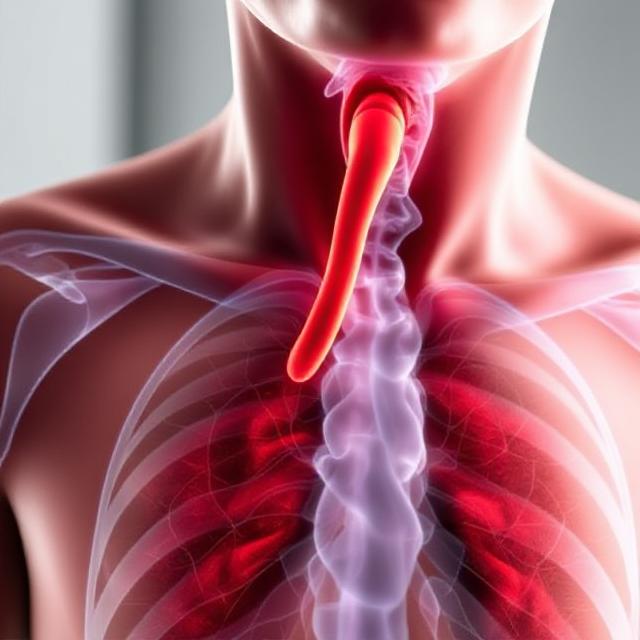
Esophageal Cancer
Esophageal cancer is a type of cancer that occurs in the esophagus, a long, hollow tube that runs from your throat to your stomach. The esophagus helps move swallowed food from the back of your throat to your stomach through a process called peristalsis.
Types of Esophageal Cancer
The two main types of esophageal cancer are:
- Adenocarcinoma: This type begins in the mucus-secreting glands in the esophagus. It is more common in the lower part of the esophagus, near the stomach. Chronic heartburn (GERD) and Barrett's esophagus are major risk factors.
- Squamous Cell Carcinoma: This type arises from the flat, thin cells lining the surface of the esophagus. It is more frequently found in the upper and middle parts of the esophagus. Smoking and heavy alcohol use are significant risk factors.
Risk Factors
Several factors can increase your risk of developing esophageal cancer, including:
- Chronic Heartburn (GERD): Long-term acid reflux can damage the lining of the esophagus.
- Barrett's Esophagus: A condition where the lining of the esophagus changes, often due to chronic acid reflux.
- Smoking: Cigarette smoking is a major risk factor for squamous cell carcinoma.
- Heavy Alcohol Use: Especially when combined with smoking, it increases the risk of squamous cell carcinoma.
- Obesity: Being overweight or obese increases the risk of adenocarcinoma.
- Older Age: The risk of esophageal cancer increases with age.
- Being Male: Esophageal cancer is more common in men than in women.
- Diet Low in Fruits and Vegetables: A poor diet may increase the risk.
- Achalasia: A condition where the lower esophageal sphincter doesn't relax properly, making it difficult for food to pass into the stomach.
- Tylosis: A rare inherited condition that causes thickening of the skin on the palms and soles.
Symptoms
Symptoms of esophageal cancer may not appear until the cancer is advanced, but can include:
- Difficulty swallowing (dysphagia)
- Chest pain or pressure
- Weight loss without trying
- Heartburn that worsens or doesn't go away
- Hoarseness
- Coughing
- Vomiting
- Pain behind the breastbone
- Fatigue
Diagnosis
Diagnosing esophageal cancer typically involves one or more of the following tests:
- Upper Endoscopy: A thin, flexible tube with a camera is passed down the throat into the esophagus, stomach, and duodenum to visualize the lining.
- Biopsy: During an endoscopy, tissue samples can be taken for examination under a microscope to check for cancer cells.
- Barium Swallow: You drink a liquid containing barium, which coats the esophagus, stomach, and upper small intestine, making them visible on X-rays.
- CT Scan: Provides detailed cross-sectional images of the chest and abdomen to assess the extent of the cancer and if it has spread.
- PET Scan: Can help identify areas of cancer activity in the body.
- Endoscopic Ultrasound (EUS): An endoscope with an ultrasound probe is used to visualize the layers of the esophageal wall and nearby lymph nodes.
- Bronchoscopy: If the tumor is near the trachea (windpipe), a bronchoscope may be used to check for involvement.
Treatment
Treatment for esophageal cancer depends on the stage of the cancer, your overall health, and your preferences. Options may include:
- Surgery: To remove the cancerous part of the esophagus and sometimes part of the stomach and nearby lymph nodes. Different surgical approaches may be used.
- Chemotherapy: Using drugs to kill cancer cells, often given before or after surgery, or as the primary treatment for advanced cancer.
- Radiation Therapy: Using high-energy rays to destroy cancer cells, can be used before or after surgery, or as the main treatment if surgery is not an option.
- Chemoradiation: Combining chemotherapy and radiation therapy, often used before surgery or as the primary treatment.
- Targeted Therapy: Drugs that target specific abnormalities in cancer cells.
- Immunotherapy: Medications that help your body's immune system fight cancer.
- Palliative Care: To help relieve symptoms and improve quality of life for patients with advanced cancer.
- Esophageal Stenting: A tube is placed in the esophagus to help keep it open if the tumor is blocking the passage of food.
Treatment planning for esophageal cancer typically involves a multidisciplinary team of specialists, including surgeons, medical oncologists, radiation oncologists, gastroenterologists, and nutritionists.
Dr. Sugandha Arya's Expertise
Dr. Sugandha Arya is a skilled surgical oncologist with expertise in the surgical management of esophageal cancer. She is dedicated to providing comprehensive and advanced surgical care, utilizing the latest surgical techniques to achieve the best possible outcomes for her patients. Dr. Arya works closely with a multidisciplinary team at Accord Superspeciality Hospital to develop personalized treatment strategies for individuals with esophageal cancer.
Contact Information
Dr. Sugandha Arya - Leading Esophageal Cancer Treatment in Faridabad
Accord Superspeciality Hospital
Budena Village, Sector 86, Faridabad, Haryana 121002
Phone: 098686 32726